
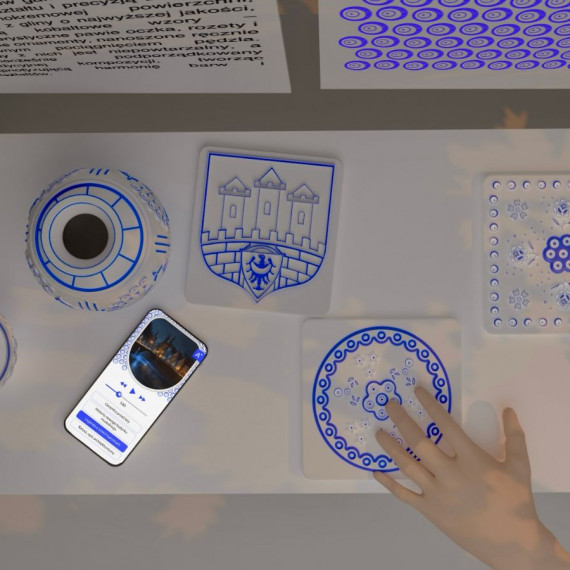
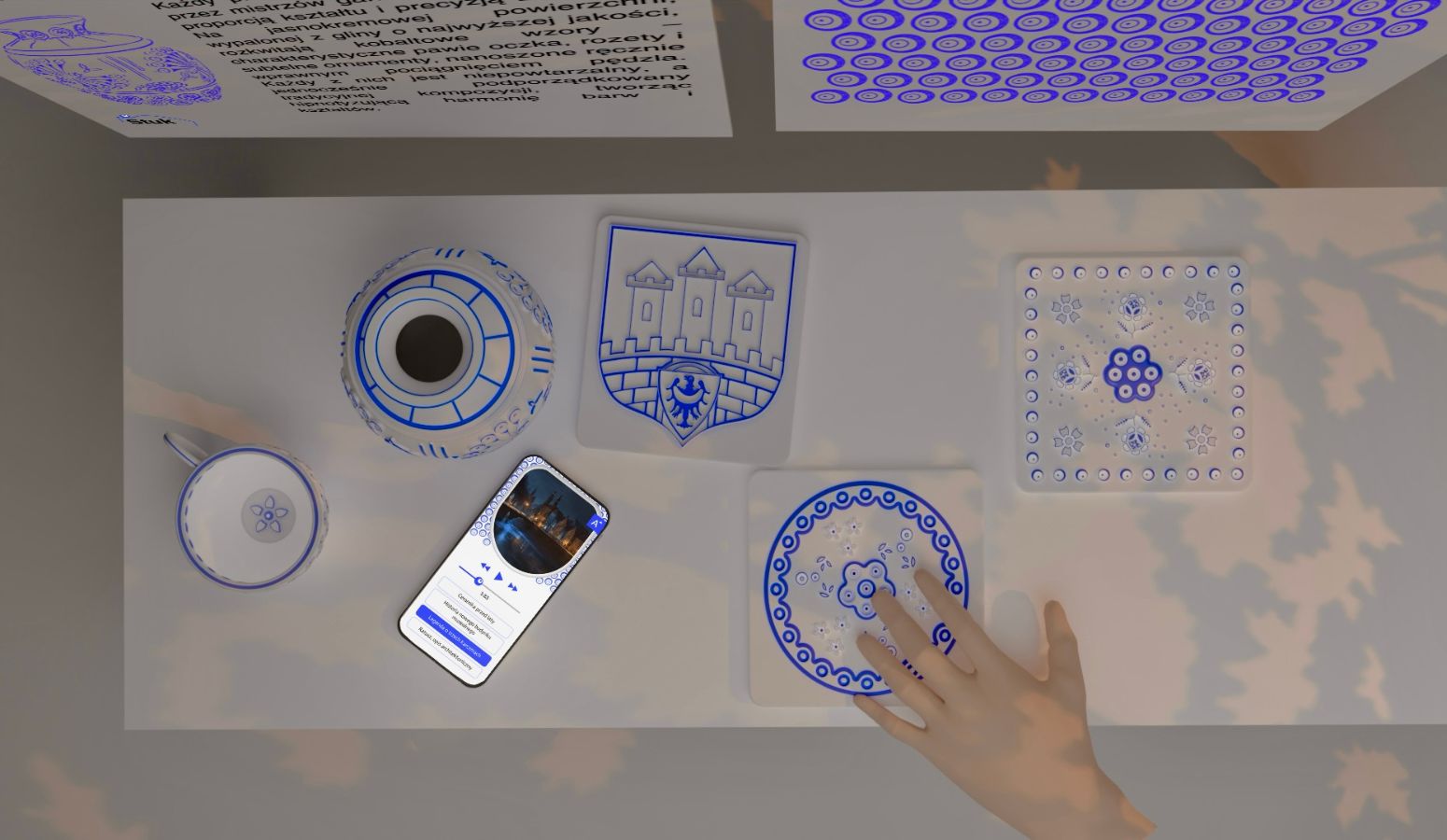
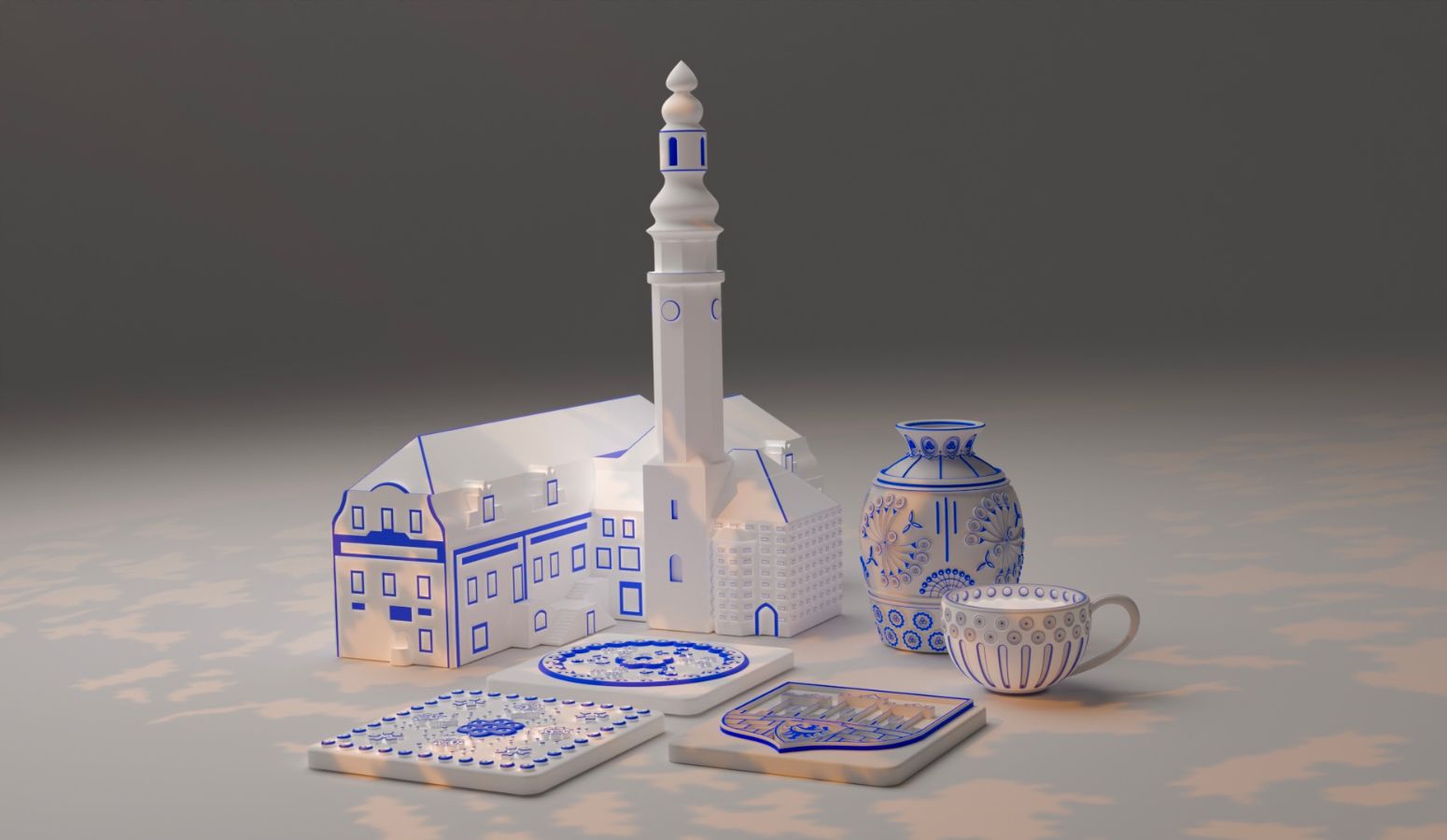
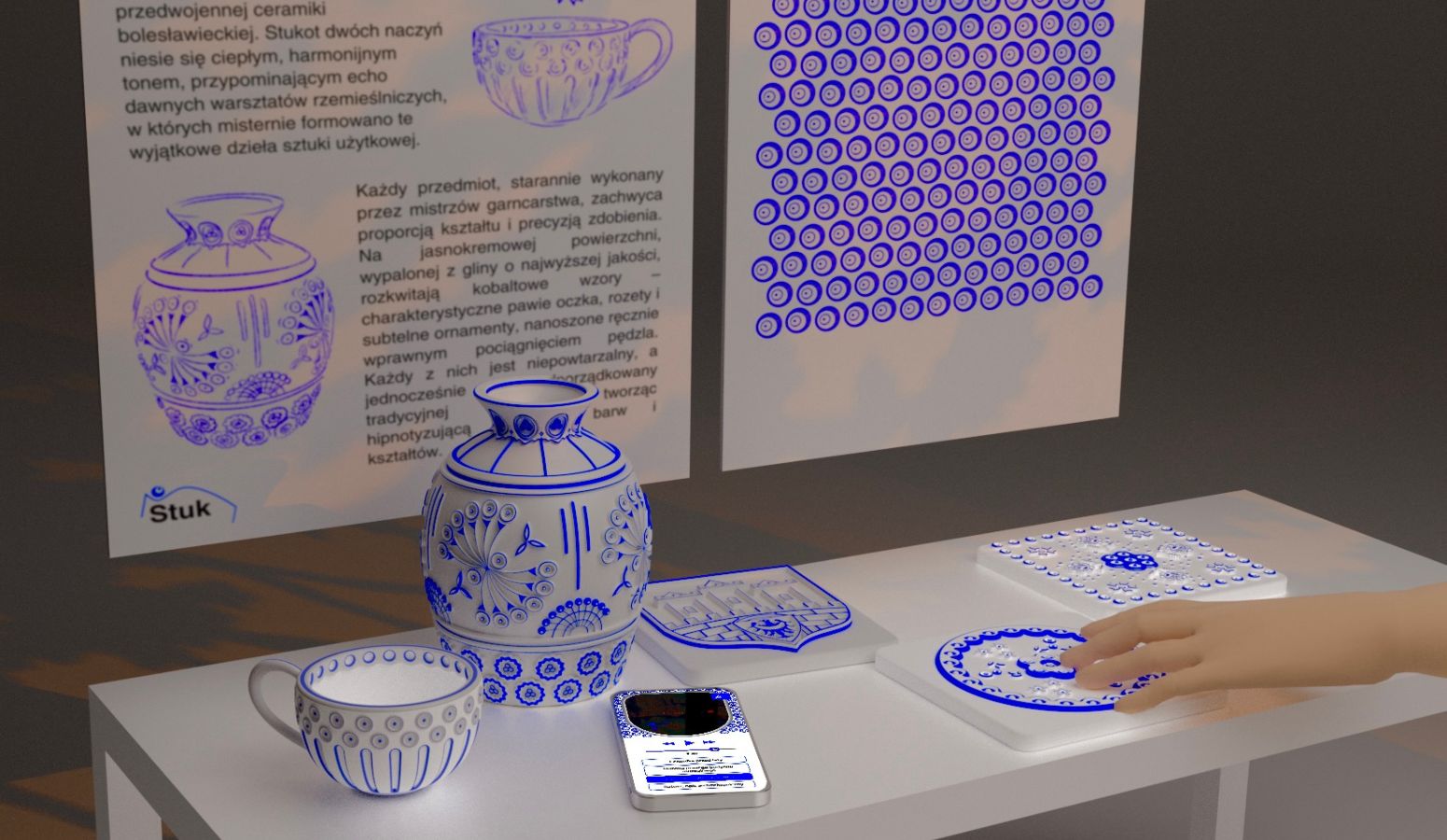
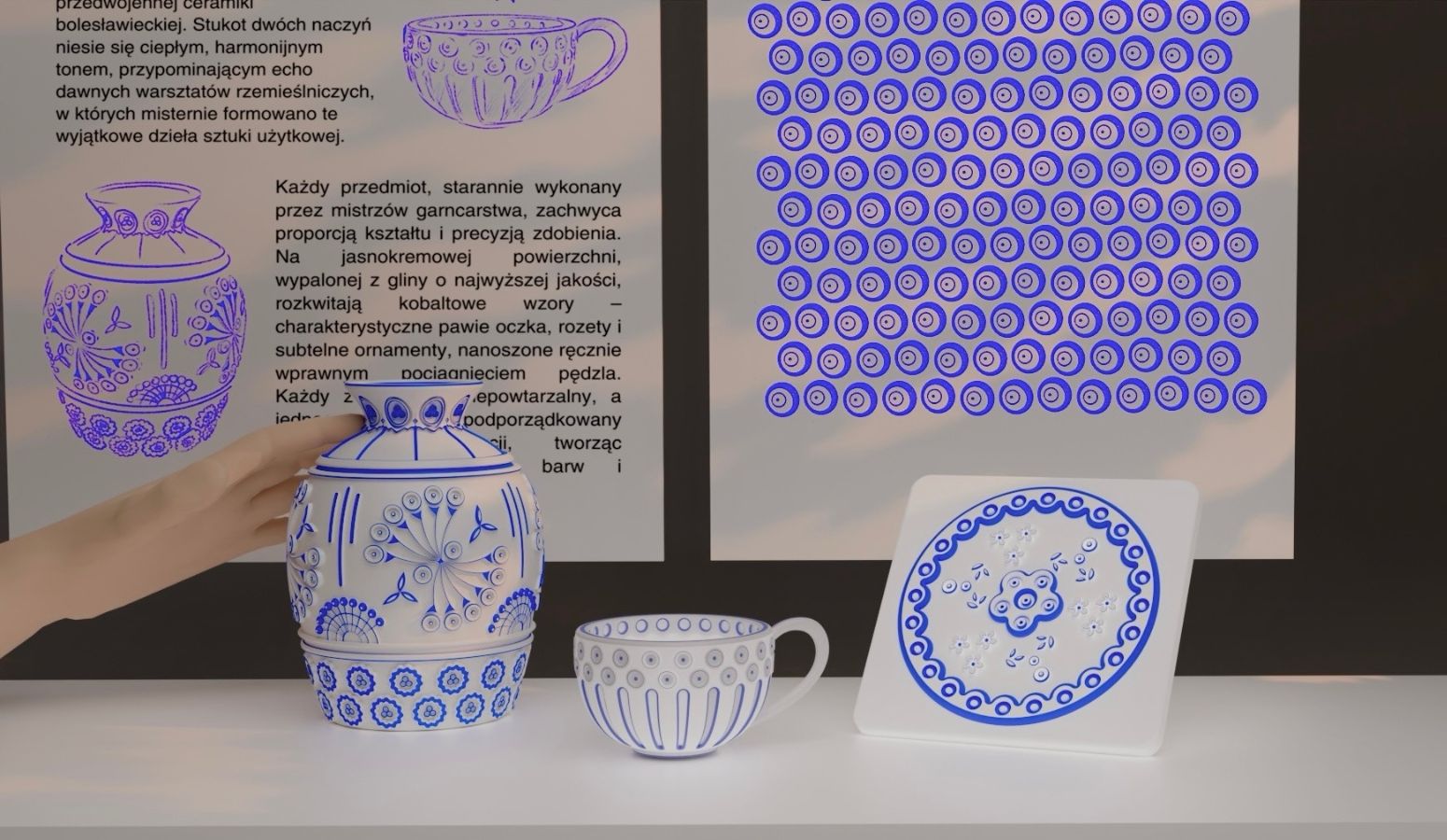
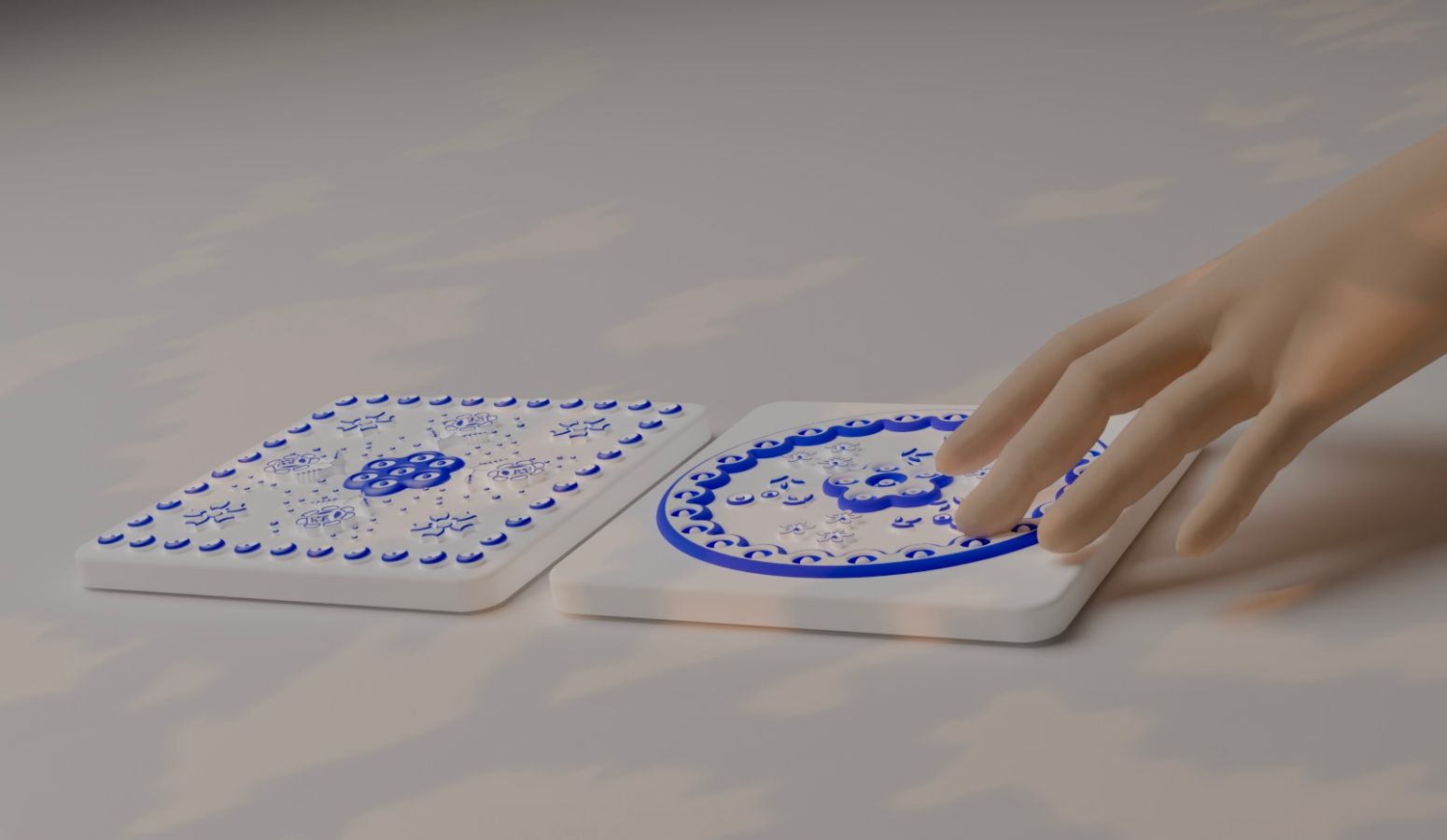
The aim of the project was to create a design that opens up the world of culture to blind and visually impaired people – allowing them not only to “see,” but above all to feel the heritage of Bolesławiec. The initiative breaks down the barriers between art and the senses. It transforms the visual elements of the city's history into tactile and auditory forms, allowing everyone, regardless of their level of vision, to experience its culture.
The inspiration came from both social need and the observation of good practices in other Polish museums. A key element of the process was the cooperation with blind and visually impaired people, who shared their experiences and expectations. Their voice was a guide at every stage of the project. Cooperation with the Ceramics Museum in Bolesławiec, which supported the project in terms of content and culture, opening up space for innovation, also proved to be extremely important. The result was a concept that combines technology, design, and empathy. It is not only an alternative way of presenting heritage, but also a way of making it truly shared.
The inspiration came from both social need and the observation of good practices in other Polish museums. A key element of the process was the cooperation with blind and visually impaired people, who shared their experiences and expectations. Their voice was a guide at every stage of the project. Cooperation with the Ceramics Museum in Bolesławiec, which supported the project in terms of content and culture, opening up space for innovation, also proved to be extremely important. The result was a concept that combines technology, design, and empathy. It is not only an alternative way of presenting heritage, but also a way of making it truly shared.